
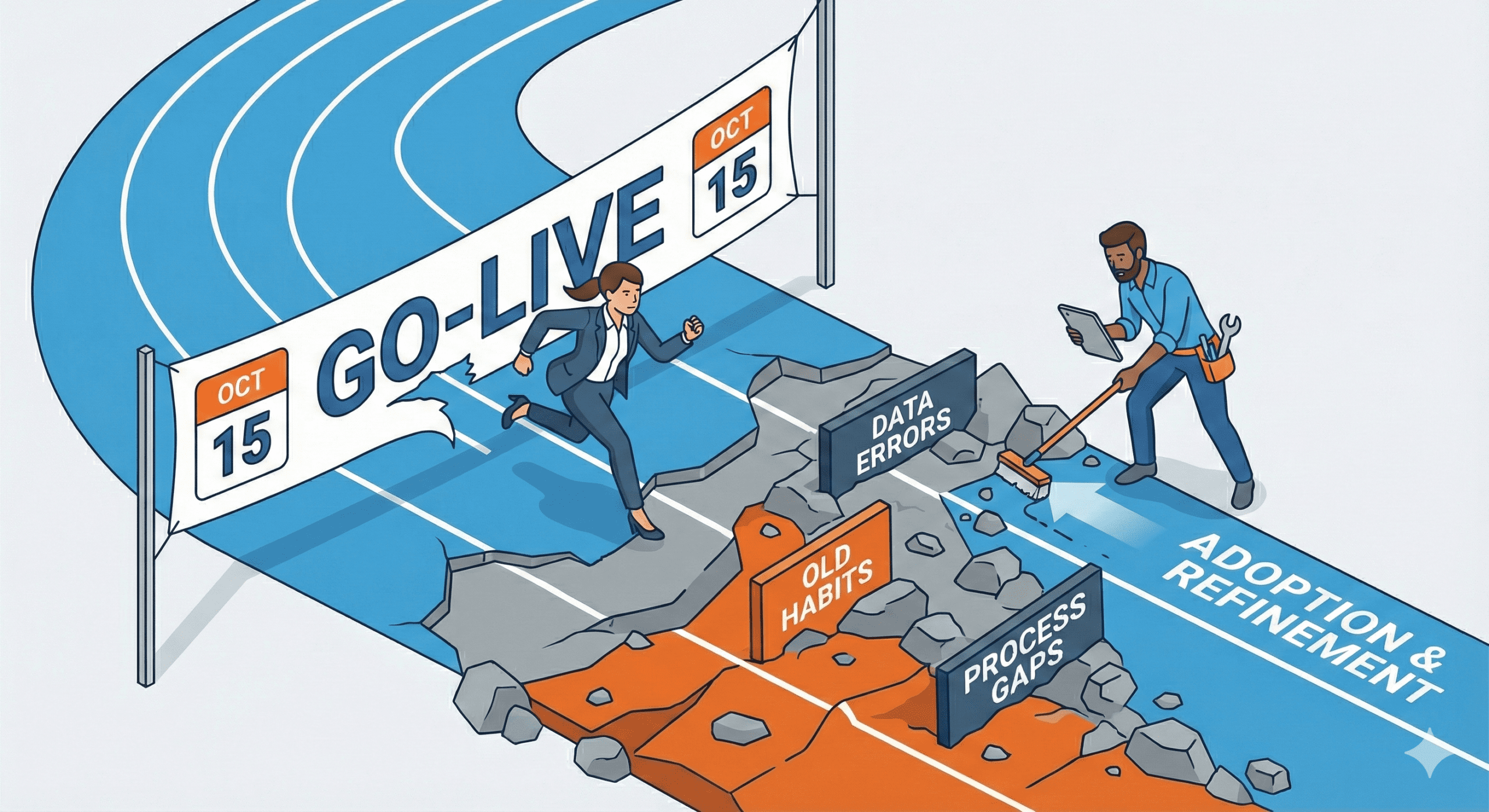
When a data analyst helps build a new reporting system, the process usually goes like this: the data is moved, then the new system goes live. At this point, it is often assumed the project is complete.
In reality, it’s the activities in the weeks following the new system going live that determine the system’s success.
Clean data and user trust don’t happen by accident — they are built through monitoring and support in the weeks after launch.
Case Study: The Asset Rental Lifecycle
I recently worked on a project involving the lifecycle of the rental of assets. The goal was to track an asset starting from the date it went on hire, right through its return, to the subsequent issue of the invoice to the customer, and the ultimate receipt of the rental payment. In particular, the business was keen to monitor the time gap between when the asset was returned, and the invoice issued, to identify any bottlenecks in the process which could be impacting their cashflow.
The new system provides transparency. The business now has a clear overview of the whole rental process. Before this, the staff had their own individual ways of tracking the status, either through spreadsheets or access to database systems which only dealt with a small part of the overall process.
The Reality of Breaking Old Habits
When staff begin using a new system, it requires a change to how they work. It’s natural in those first few weeks for:
- Information to be missed
- Data to be entered in the wrong fields
- General confusion to arise about the new process
This isn’t a result of a lack of effort, just the reality of learning something new while trying to get through a busy day and old habits often being hard to break.
However, if a data analyst walks away the moment the system is live, these small errors pile up. Quickly, reports become untidy, the data becomes unreliable, and people stop using the system because they don’t trust it.
Small errors pile up
The Analyst’s Role: Refining the System and Supporting the Team
The way to fix this is simple but often overlooked: keep the data analyst involved to help embed the system and monitor the data entry.
In the early few weeks of the rental system going live, to make sure the system was fit for purpose:
Early regular checks were carried out — the data was checked every few days and any fields that were being ignored or misused were fed back to the team. By keeping the data clean, and spotting anomalies early, corrections could be made before month end reports were run.
The process was refined — if multiple people were making the same error, it usually meant the process needed to be clearer or the field was poorly placed or worded.
Uptake was encouraged — staff received help either one-to-one or in group calls to help them feel supported, rather than frustrated. When the staff became comfortable using the new system, they began to see the benefits and trust the new process.
Keep the data analyst involved to help embed the system and monitor the data entry.
What the business gains from early checking
The monitoring of the data only lasted a few months, just long enough to ensure people trusted the system and the data. This in turn gave staff confidence to step away from old, siloed ways of working.
The steps taken to embed quality data from the start provide the business with transparency in tracking the asset rental lifecycle and importantly obtain clearer insights into its cash management.
The Goal: Ensuring New Habits Stick
A new system can be a big investment. Keeping a data analyst involved during the early days of adoption ensures the staff feel confident inputting data, the data stays clean, and the outputs from the system are reliable and trustworthy.
Clean data does not happen by accident. It happens when data analysts stay long enough to ensure new habits stick.
Clean data does not happen by accident. It happens when data analysts stay long enough to ensure new habits stick.